
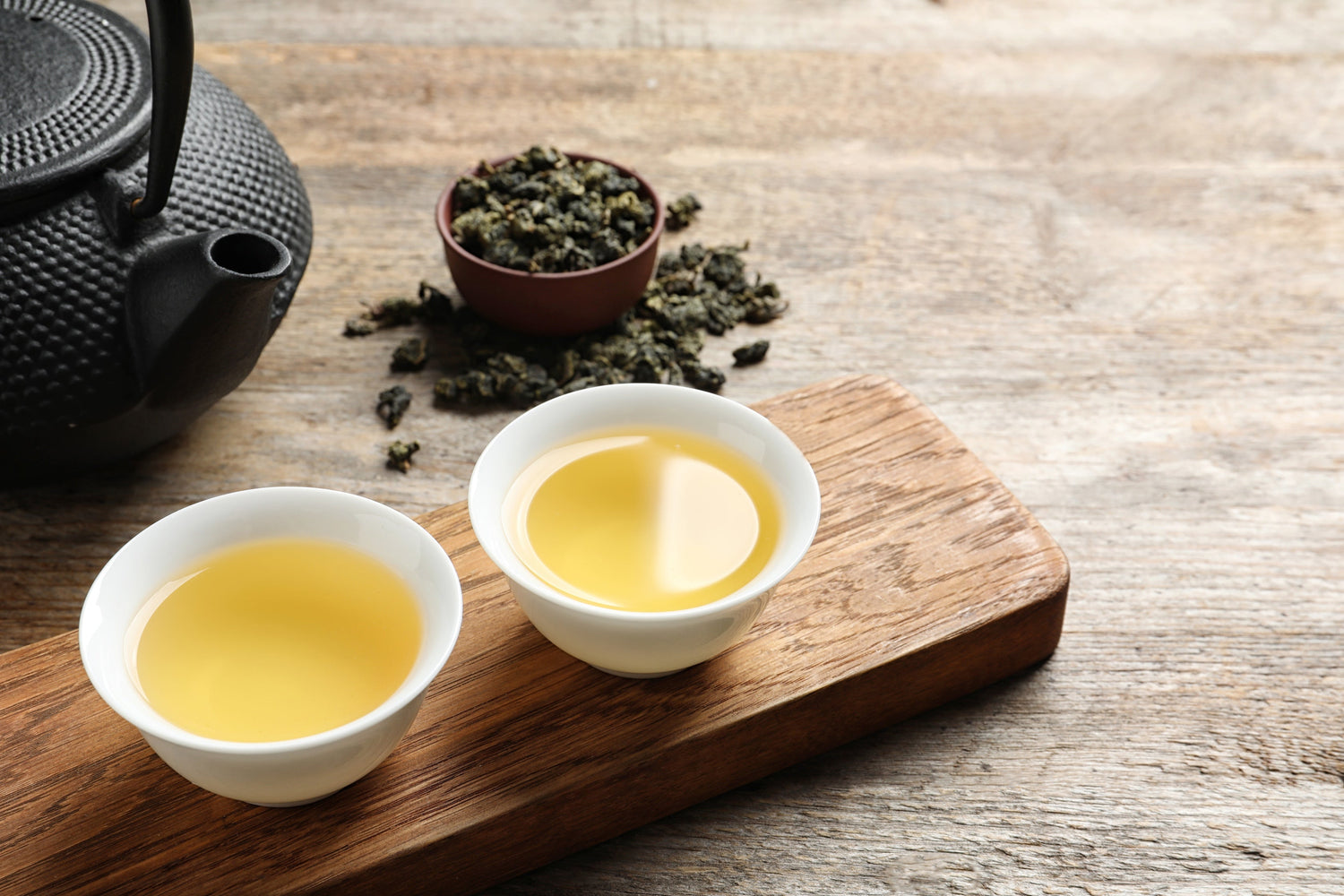
Many people turn to oolong tea to enjoy its well-known benefits, and with the right approach, they can truly experience positive effects.
While simply drinking something called “oolong tea” might not always deliver the full value, understanding how to consume it properly can unlock its full potential.
At Zenith Leaf, we specialize in traditional loose-leaf teas crafted to promote everyday wellness.
The Health Benefits of Oolong Tea
Oolong tea contains a range of naturally occurring compounds—most notably polyphenols, catechins, and L-theanine—that have been studied for their potential role in supporting long-term health. But it’s important to approach this with clarity: these effects are subtle, and cumulative—not something you feel overnight.
At a Glance:
- Supports metabolism and fat oxidation
- Provides antioxidants that help reduce oxidative stress
- Promotes calm, focused mental energy
- May support heart health and cholesterol balance
- May help regulate blood sugar over time
Diving Deeper
1. Metabolic Support

One of the more studied areas is metabolic function. Oolong tea may modestly increase energy expenditure and fat oxidation. Some research suggests that regular consumption can slightly enhance how the body uses energy, particularly when combined with an otherwise healthy lifestyle. The effect isn’t dramatic, but findings are directionally consistent.
2. Antioxidant Support

Oolong tea contains a variety of antioxidants—especially polyphenols and catechins—that help combat oxidative stress in the body. Oxidative stress is linked to aging and a range of chronic conditions, so regular intake of antioxidant-rich foods and beverages can play a role in supporting overall cellular health.
3. Calm, Sustained Mental Clarity
Oolong tea provides a combination that’s relatively unique: caffeine for alertness and L-theanine for calm focus. This pairing has been shown to support attention and cognitive performance while helping smooth out the sharper spikes and crashes often associated with other caffeinated beverages.
4. Heart Health and Cholesterol Balance

Some studies suggest that regular tea consumption may support cardiovascular health. The polyphenols found in oolong tea have been associated with improvements in lipid profiles and may contribute to maintaining healthy cholesterol levels over time. While tea alone isn’t a solution, it can be a supportive element within a heart-healthy lifestyle.
5. Blood Sugar and Inflammatory Response
Oolong tea has also been studied for its potential effects on blood sugar regulation. Certain compounds in the tea may help support the body’s normal glucose metabolism and inflammatory response. As with many nutritional factors, the benefits appear most meaningful when consumption is consistent over time.
The Catch: Consistency
What ties all of this together is not intensity, but consistency and delivery. These compounds don’t work in isolation, and they don’t operate effectively when consumed sporadically or in large, infrequent doses. Their value comes from being introduced gradually, repeatedly, and as part of a broader daily rhythm.
And that brings us to the practical side of it—because the quality of oolong you choose, and how it’s prepared, plays a much larger role in how these compounds are actually experienced.
Side Effects
Oolong tea is generally gentle and well-tolerated, but like any caffeinated drink it can come with a few mild side effects.
Drinking large amounts may lead to jitteriness, headaches, trouble sleeping, or an upset stomach—especially if you’re sensitive to stimulants. Avoid drinking it at least 6 hours before going to bed if you are sensitive.
Enjoying oolong in reasonable amounts throughout the day is a safe, healthy habit for most people, but it’s always a good idea to listen to your body and adjust your intake if you notice unwanted effects.
Some of Our Oolong Teas
Our most popular oolong is Iron Goddess of Mercy: a lightly oxidized, highly floral cup with creamy notes.
What is Oolong?
Most people imagine that oolong tea comes from a certain type of tea plant, but that's actually not the case. Tea types aren’t defined by different plants, but by how the leaves are processed after they’re picked. The key variable here is oxidation.
An example of oxidation occurs when you cut an apple and leave it exposed to air, causing the fruit to darken. Similarly, tea leaves undergo oxidation if left out after rolling. Black tea is fully oxidized, while green tea remains unoxidized.
Oolong exists on a spectrum between green tea and black tea.
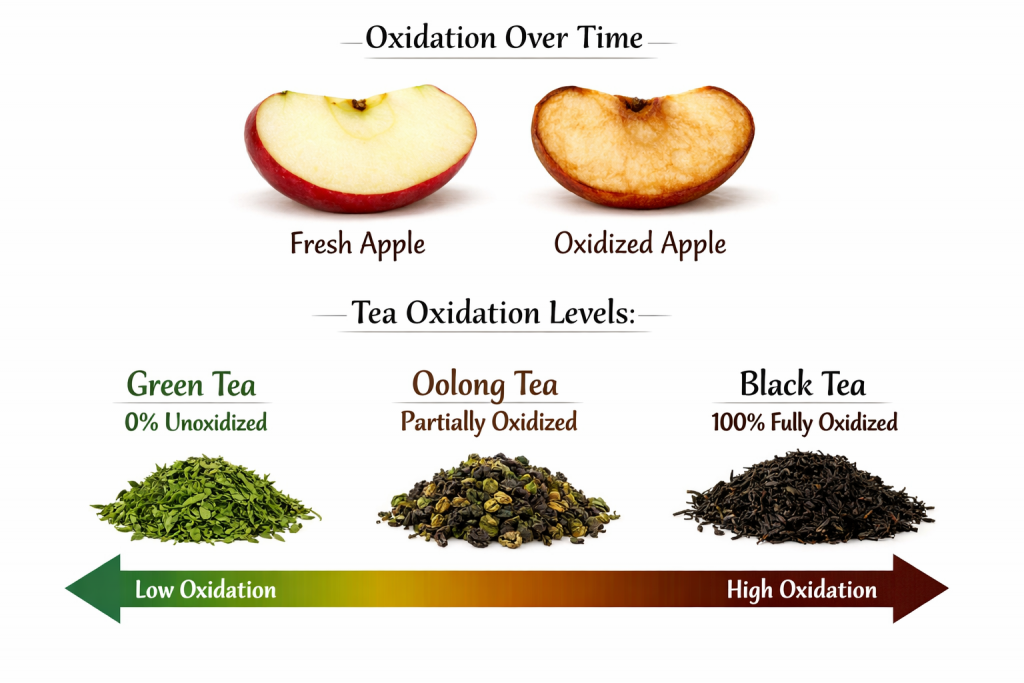
That wide range—anywhere between about 10% to 90% oxidation— is what gives oolong its diversity. A lightly oxidized oolong can taste closer to green tea—fresh and floral—while a heavily oxidized, roasted oolong can lean toward the deeper, richer profile of black tea.
Where Does Oolong Come From?
Since oolong tea is defined by its level of oxidation rather than the specific tea plant, it can be produced in any tea-growing region. However, the finest oolongs traditionally come from select areas in China and Taiwan, where this tea style originated.
In China, the most renowned oolong-producing regions are Fujian and Guangdong provinces. While other Chinese regions like Yunnan also cultivate tea, they are primarily recognized for their black, green, white, and dark teas rather than oolong.
Taiwan is renowned for producing some of the world's finest oolongs. Key growing regions include Nantou, Chiayi, Taichung counties, and New Taipei City. Within these areas, several famous mountains cultivate distinct varieties of oolong, each with a rich and storied heritage.
Oolong Vs Green Tea?
So, what’s the difference between the health benefits of oolong tea and green tea?
In practice, not much.
Both come from the same plant and contain similar compounds—antioxidants, polyphenols, and moderate caffeine. The difference in terms of health impact is marginal for most people. What matters far more is consistency and how you actually incorporate the tea into your day.
Darker oolong varieties resemble black tea more than green tea, yet even premium black tea provides health benefits, albeit somewhat different from those of green tea.
In general, the real distinction comes down to taste preference.
Oolong offers a wider range of naturally occurring flavors and aromas—floral, creamy, roasted, mineral, sometimes even fruit-like—depending on how it’s processed. For that reason alone, many people prefer oolong tea over green tea. It’s also the most diverse category of tea, which is why it has been so highly regarded among tea lovers for centuries.
Organic Vs. Non-Organic
Whether a tea is USDA certified organic or not, its safety and health benefits depend on several factors. Often, small-batch teas are grown using standards and practices that surpass USDA organic requirements. However, farmers may lack the resources to obtain certification or may find it unnecessary because they cater to a niche market familiar with their high-quality growing methods and local land conservation regulations. In other words, the finest teas do not require certification to be exceptional, much like wine does not.
Furthermore, an increasing number of tea brands falsely claim USDA organic certification. Obtaining certification for imported tea can be costly and challenging. While certification as a domestic repacker is more affordable, it increases the tea's overall cost. These hurdles often lead brands to misuse the USDA organic label to boost sales.
If a brand claims USDA Organic Certification, always doublecheck using the USDA Organic Integrity Database.
Caffeine Content
Understanding how caffeine in oolong tea works is more important than simply comparing it to coffee. By weight, tea leaves contain more caffeine than coffee beans. However, the grinding and brewing methods used for coffee produce a stronger caffeine concentration per cup than tea. That said, oolong will still provide a notable energy boost, depending on how it is prepared and consumed. Be careful not to drink too much in the evening.
One key difference between oolong tea and coffee is that oolong contains compounds that counterbalance the effects of caffeine. The most notable of these is l-theanine, which, when paired with caffeine, promotes a calm, focused alertness without causing jitters. Green and white teas are also rich in l-theanine.
Another unique aspect of oolong tea is that its polyphenols slow the absorption of caffeine, providing a gentle, sustained energy boost that lasts longer without a sudden crash.
The Convenience Trap

When it comes to getting the health benefits from oolong tea, most modern solutions are built around speed and convenience. That’s where things start to fall apart.
Oolong Tea Extracts
Take oolong tea extracts for example. On the surface, they sound ideal: concentrate the benefits, take it once a day, move on. It fits neatly into the mindset of “optimize and simplify.”
But nature doesn't work like that.
When you create an extract, you’re not capturing the full spectrum of compounds the plant naturally contains—you’re selecting and concentrating certain ones while losing others. That matters because many of these compounds work together. Strip away parts of that system, and you weaken the whole.
There’s another issue: delivery.
An extract introduces a large concentration of compounds all at once. The body doesn’t necessarily absorb or utilize that efficiently. Much of it simply passes through. So while you may technically be “getting” the compounds, you’re not necessarily using them.
Tea Bags
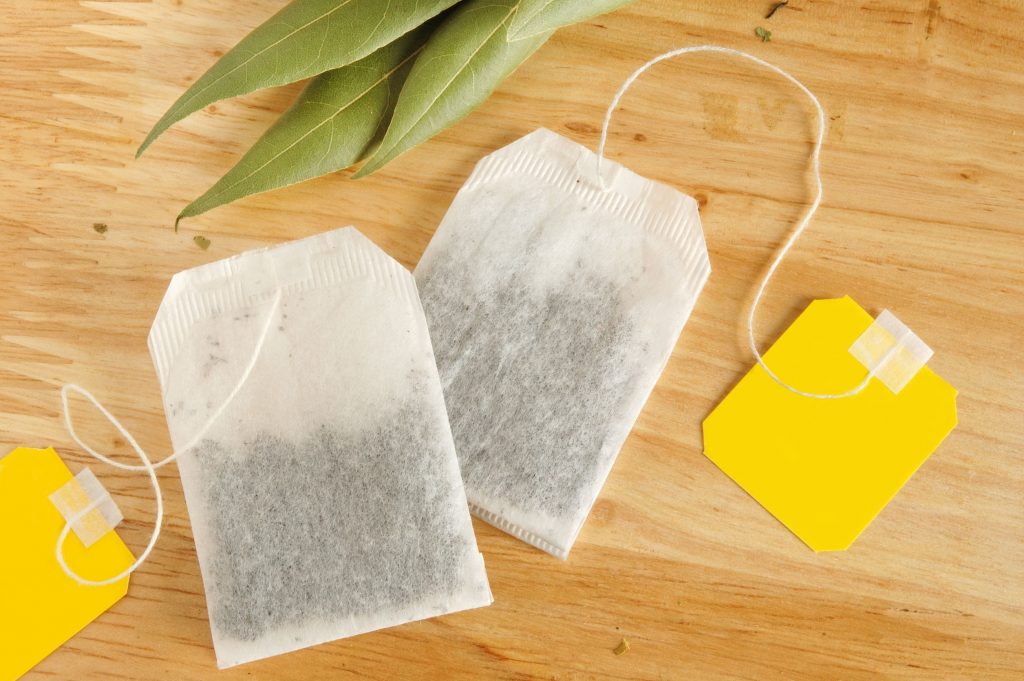
Tea bags seem like a better alternative—but they come with their own problems.
Poor Quality Tea Leaf
First, tea bags are typically filled with the lowest grade of tea leaves—leftover fragments after the premium leaves have been selected for loose leaf tea. This remaining material is often called “tea dust” or “broken tea.”
These small particles extract very quickly into the water because of their increased surface area, like powder would. That might seem like a benefit, but it creates the same issue as extracts: too much, too fast. The body can't utilize it efficiently.
You end up with a cup that’s strong, one-dimensional, and consumed quickly. Even though it’s technically “tea,” it’s still not an effective way to deliver the full range of what oolong tea has to offer.
Unwanted Substances
Second, and perhaps more important, is the material itself. Many tea bags and sachets have been shown to leach unwanted substances into hot water, even ones made from alternative materials like corn. That alone should give pause.
The "Supplement" Mentality

Treating oolong tea like a supplement—something you drink purely to extract benefits—rarely works.
It turns into a short-term experiment. You drink it for a while, expect results, and then drop it when nothing dramatic happens. That approach isn’t sustainable. Oolong tea only becomes part of your life if you actually enjoy it and truly desire to keep it in your life, and that enjoyment is not secondary—it’s central.
The benefits don’t come from the compounds alone. They come from the full context: the act of brewing, the repeated steeping, the small pauses throughout the day, the sensory experience of aroma and warmth.
A consistent tea practice introduces structure. It creates moments of stillness. It subtly reinforces better patterns—hydration, attention, even how you move through your day. Over time, those small effects stack, not just physically, but mentally and emotionally as well. That’s where the real value starts to take hold.
Bold Marketing Claims
Before going any further, it’s worth noting that some tea brands lean heavily on bold health claims when it comes to oolong—rapid weight loss, radiant skin, detoxification, dramatic results. Brands like that will often pay individuals to post exaggerated reviews. These same brands are often the ones falsely claiming USDA Organic Certification (check the USDA Organic Integrity Database).
Bold messaging is designed to sound convincing and tell you what you want to hear, not to reflect how tea actually works.
In most cases, the bigger the claim, the less attention is being paid to the quality of the tea itself. Being cautious about these marketing tactics will help keep you grounded in reality.
Having the Right Expectations
When exploring the health benefits of drinking oolong tea, it's crucial to interpret scientific findings for what they are and maintain realistic expectations. Drinking oolong tea will most likely not:
- Make you suddenly lose weight
- Detoxify you
- Transform your skin
- Fix your sleep
- Cure an illness
- Significantly reduce inflammation
- Dramatically improve digestion
- Stabilize your blood sugar
- Lower your blood pressure in a meaningful, reliable way
Drinking oolong tea may help these things, but it should be integrated as part of your wellness routine, not as a solution on its own.
What You Can Expect
If you approach it properly—and source it well—oolong tea will still play a valuable role in your wellness routine.
Your Mood May Improve
Oolong tea contains compounds associated with calm alertness, most notably l-theanine, which has been widely researched for its effects. Beyond that, the act of brewing and re-steeping oolong throughout the day creates natural pauses—small moments to reset.
That matters more than people think (more on that later).
There’s also the sensory side: aroma, warmth, texture. These aren’t trivial. They shape how you feel.
Your Hydration May Improve
Yes, caffeine is a mild diuretic. But in practice, the water you take in far outweighs any fluid loss. With lighter infusions and repeated steeping, you end up consuming more liquid over a longer period of time.
The result is simple: you stay more consistently hydrated throughout the day (more information on the misconception that tea dehydrates later).
Your Intake of Beneficial Compounds will Increase
High-quality oolong tea contains a range of antioxidants and phytonutrients.
It would be misleading to promise any specific outcomes from that alone. But increasing your intake of these compounds—consistently, over time—is a reasonable step to take if you care about your long-term health.
It Can Reinforce Better Habits
This is the part most people overlook.
A daily tea practice introduces structure. It gives you a reason to pause, to step away, to be a bit more intentional with your time. That often spills into other areas—better food choices, more movement, increased health and body awareness, moments of reflection and calm.
It Can Help Bring People Together
Sometimes, it’s simply about sharing moments with others. Sitting down over tea, talking, slowing things down for a few minutes.
That, too, is part of health and an interesting tea like oolong can heighten that experience.
The Real Shift: Rethinking How You Drink Tea

Traditionally, oolong tea wasn’t consumed in isolated, strong servings. It was consumed in smaller, but more frequent amounts.
Instead of using a small amount of leaf for a long steep, a larger amount of leaf (whole leaf) would be used with very short infusion times—often just a few seconds. The same leaves would then be re-steeped again and again, lasting into the evening.
This method—commonly referred to as gongfu brewing—completely changes the experience.
Each infusion reveals something slightly different. The flavor evolves. The leaves gradually open up. The texture shifts. And more importantly, the compounds within the leaves are released more slowly over time.
This is how oolong tea has been traditionally consumed in China for thousands of years and continues to be the foundation of our practice here at Zenith Leaf.
Drinking Smaller Amounts More Frequently
Although brewing oolong the traditional way is great, it might not be for everyone.
The most important distinction of the traditional method is that smaller amounts are drunk more frequently. There are simpler ways to brew oolong tea that still achieve this, one of which will be demonstrated at the end of this article.
First, let's look at why that distinction matters.
Delivery of Beneficial Compounds
By sipping your tea slowly and consistently throughout the day, you're not flooding the body with a high concentration compounds all at once, you’re introducing them gradually. This allows for more even absorption and utilization.
Sustained Hydration
At the same time, you’re naturally increasing your water intake. Not in large bursts, but in a steady, sustained way.
That steady hydration is one of the most overlooked benefits of drinking tea—but it only really happens when tea becomes part of your day, not just a moment within it. Better hydration means better delivery of nutrients throughout your body.
The Misconception of Dehydration
It’s worth addressing the common misconception that because tea contains caffeine, it dehydrates you.
It’s true that caffeine is a mild diuretic, but in practice, the amount of water expelled from the body is small compared to the amount of water you’re taking in when you drink tea. The net effect is still hydration, and not much different from drinking plain water (yes, science proves that).
In fact, because tea is more enjoyable to drink, people often end up drinking more, lighter infusions of it throughout the day. In that sense, tea can actually be a more effective way to stay hydrated than water.
The Hidden Layer: How It Changes Your Day
There’s another layer to this that has nothing to do with compounds, antioxidants, or extraction curves—and it’s arguably just as important.
When you drink tea in small, frequent quantities, it becomes a rhythm.
Mental Pauses
The act of re-steeping the leaves throughout the day creates small, built-in pauses.
Moments where you step away, even briefly, from whatever you’re doing. You refill your cup. You pour water over the leaves again. You take a moment to breathe.
Movement
You’re not sitting in one place for hours at a time. You have a reason to get up, walk to your kettle, and move your body. Circulation improves—not because you decided to overhaul your lifestyle, but because the structure of your day changed in a small, repeatable way.
Awareness
It also encourages a different kind of attention.
Every infusion is slightly different. The color deepens with the first few infusions, then softens later. The aroma shifts. What starts as something fresh and golden might move toward something rounder, quieter.
Over time, this builds a kind of awareness. Not in an abstract sense, but in a very practical one. You’re paying attention to small changes. You’re engaging with something that unfolds slowly.
That’s where the idea of “intentional living” stops being a concept and starts becoming something you actually do.
Why Loose Leaf Changes Everything
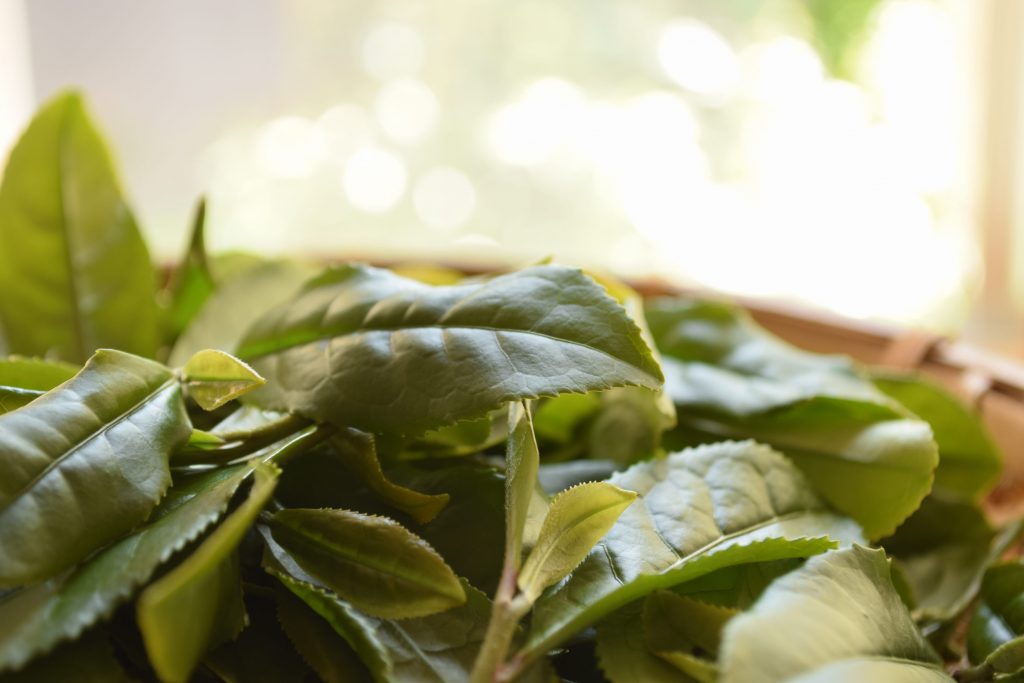
The quality of tea matters just as much as the method. Whole, unbroken leaves behave very differently than the fine particles found in tea bags. They open slowly, release their contents gradually, and they can be re-steeped many times.
This slower release aligns with the idea of steady delivery.
Therapy Through the Senses
Part of the loose leaf experience is visual, almost tactile in a quiet way.
You can actually see what you’re drinking—the shape of the leaves, their color, the way they unfurl and expand over time. It’s a subtle but constant reminder that this isn’t something abstract or manufactured. It comes from a plant.
It brings you a little closer to the source of it—closer to something natural—and, by extension, to that same natural dimension in your own life.
Where to Start (Without Overcomplicating It)
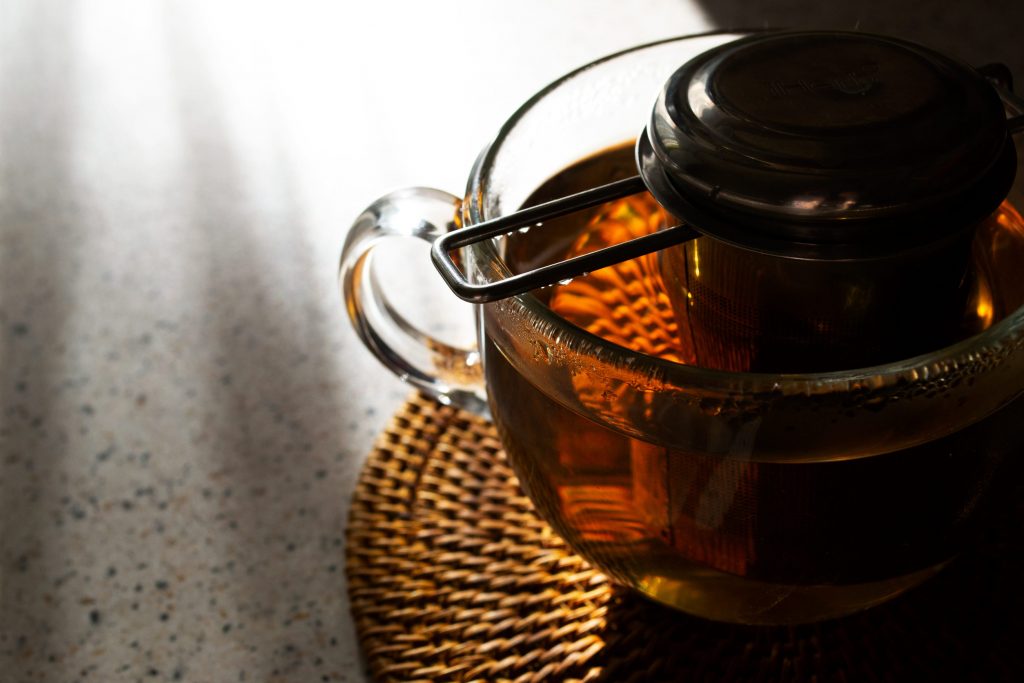
Gongfu brewing is a great way to approach tea—but it doesn’t have to be your starting point.
All you really need is a tea infuser and a quality loose leaf oolong tea, like our Iron Goddess of Mercy. That alone is a major step up from tea bags.
Use about a teaspoon of loose leaf tea and steep it for 3–4 minutes, just as you would with a tea bag. Allow the water to cool slightly before pouring. Lighter oolongs, such as Iron Goddess of Mercy, brew best at around 195°F, while darker oolongs can tolerate higher temperatures. You’ll instantly notice a cleaner, more complex flavor thanks to using higher-quality leaves and the ideal water temperature, which is easy to achieve with a temperature-controlled kettle.
And most importantly—you can steep those same leaves multiple times and even sprinkle a bit more on top to extend the flavor indefinitely. That’s where the shift begins.
Over time, you may find yourself naturally re-steeping, stretching the experience, and integrating tea more fluidly into your day.
The Bottom Line
The benefits of oolong tea aren’t locked behind some rare or expensive product. They’re hidden in plain sight—but they’re tied to a way of consuming tea that most people have never been exposed to.
About Zenith Leaf
Zenith Leaf is a premium tea brand dedicated to making tea a daily ritual rooted in wellness, tradition, and simplicity. We source pure, single-origin loose-leaf teas from renowned growing regions around the world, working with farms where cultivation has been refined over generations.
Our focus is on authenticity—no blends, no additives—just tea in its truest form, designed to support balance, connection, and everyday enjoyment.